Strength as a long-term asset.
Muscle and the nervous system that drives it do more than lift weights. Strength supports balance, bone loading, glucose handling and the ability to move without hesitation as the years pass. This page outlines the movement patterns, loading ideas and weekly structure that adult men commonly use to build and keep strength.
Published 01.2026, reviewed 2026. General information, not a personal programme.
How strength develops over time
Gains in strength follow a recognisable sequence. The stages below describe what often happens for someone starting from low training experience.
- Weeks 1 to 4 - Learning. Early improvements come largely from the nervous system: better coordination, better recruitment of muscle fibres and growing confidence with technique. Visible muscle change is small in this window.
- Weeks 5 to 12 - Building. Muscle fibres begin to enlarge when volume, effort and protein intake are adequate. Loads can usually rise in small increments from session to session.
- Months 4 to 12 - Refining. Progress slows, and variation in exercises, rep ranges and rest periods becomes more important. Planned lighter weeks help manage fatigue.
- Year 2 onward - Maintaining and extending. Gains arrive in smaller steps, and the main aim for many men turns to keeping capacity steady through changing seasons of life.
Core movement patterns
Most programmes can be understood as combinations of six patterns. The table pairs each with common exercises and a functional link.
| Pattern | Examples | Everyday link |
|---|---|---|
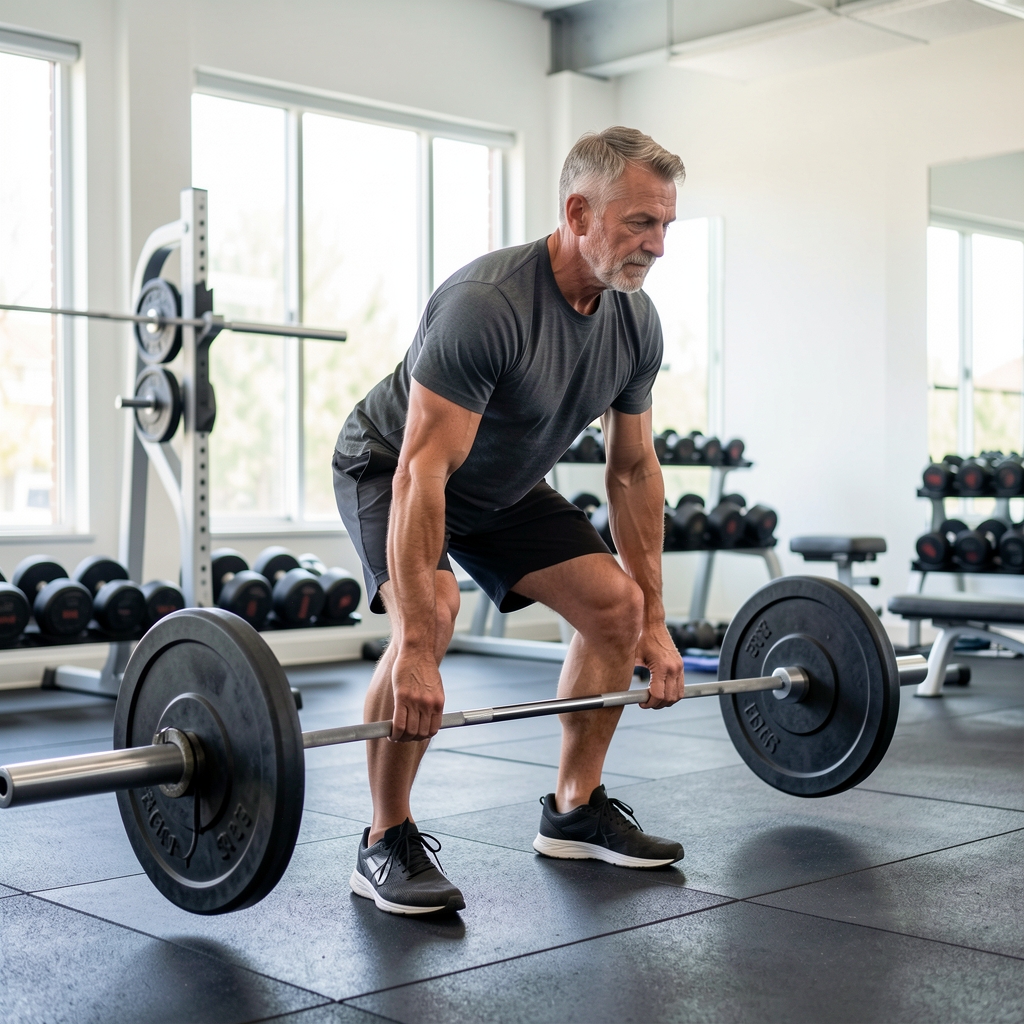
| Squat | Goblet squat, box squat, back squat | Rising from a chair, picking up a child |
| Hinge | Romanian deadlift, kettlebell swing | Lifting a box from the floor |
| Push | Push-up, overhead press, bench press | Pushing a door or lifting a bag overhead |
| Pull | Row, pull-down, pull-up | Opening heavy doors, climbing |
| Carry | Farmer carry, suitcase carry | Shopping bags, luggage |
| Trunk control | Plank, dead bug, side bridge | Stabilising the spine during every movement above |
Related reading
Functional fitness
How strength transfers to carrying, climbing and moving through a normal day.
Nutrition for training
Protein distribution, energy intake and hydration in a warm climate.
Longevity
Why grip strength and leg power are discussed in long-term health research.
Practical principles
- Train each major pattern at least twice per week.
- Use a weight that leaves one to three repetitions in reserve on most sets.
- Rest two to three minutes between heavy sets so quality stays high.
- Add load or repetitions gradually, and repeat a week if technique slips.
- Treat sore joints as information; adjust the exercise instead of pushing through.
- Record weights and repetitions so progress is visible over months.
Frequently asked
How heavy is heavy enough? Research on resistance training suggests that a wide range of loads can build strength when sets are taken close to fatigue. Lighter loads need more repetitions; heavier loads need fewer. Choose a range you can perform with steady technique.
Is it too late to start in my fifties? Studies of older adults show that resistance training produces gains at many ages. Starting gradually, with qualified supervision where possible, is a common approach.
Do I need a gym? A pair of adjustable dumbbells, a resistance band and a sturdy bench cover most of the patterns above at home.
Strength is a form of independence. The goal of a lifting plan is rarely a number on a bar; it is the ordinary freedom to lift, carry and climb without calculating the cost.
Before starting a new programme, consider a conversation with a qualified health professional, especially if you have joint, heart or blood pressure concerns. See the disclaimer and injury resilience for more context. You can test a few basic movements on the assessment page. Questions: contact, +62 817 9345 1820, Jalan Anggrek Raya No. 15, Kemang, Jakarta Selatan 12730.