A calm way to take stock.
A self-assessment is a set of simple checks that give you a reference point for strength, movement and daily habits. It is not a medical test and does not diagnose anything. Repeated every couple of months, the same checks show trends that are more useful than any single result.
Published 01.2026, reviewed 2026. For adults without known medical restrictions; seek professional advice first if unsure.
Why measure at all
Feelings about fitness drift. A man who walks the dog and climbs stairs may assume nothing has changed, yet a simple timed test often shows gradual shifts. Writing results down converts impressions into information and makes it easier to see whether a change in routine is helping.
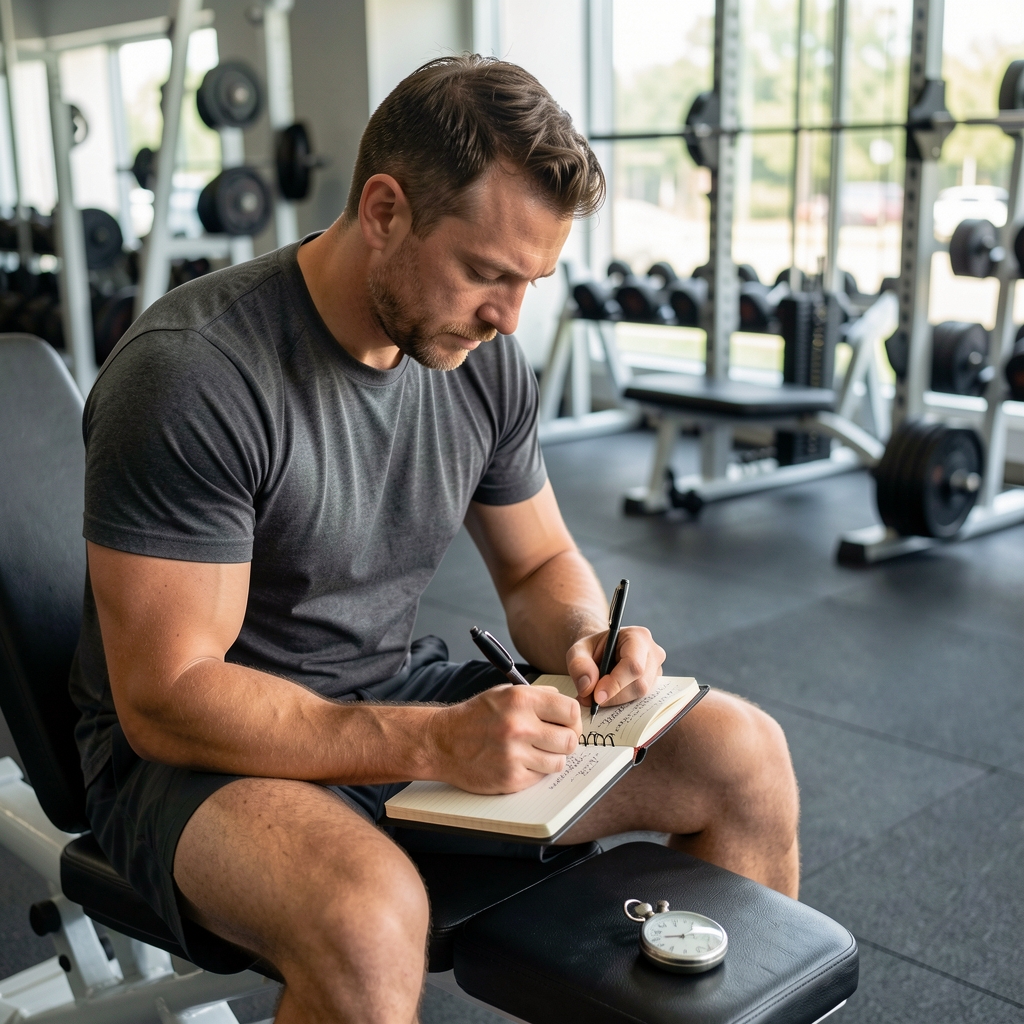
Choose checks that need little equipment, can be repeated under similar conditions and carry little risk. Perform them after a warm-up, at a similar time of day and in similar footwear. Record the date, how you slept and how you felt, because those notes explain much of the variation.
Stop any test if you feel pain, dizziness or unusual breathlessness, and discuss it with a qualified health professional. See the disclaimer for the limits of this site.
Five checks and how to read them
| Check | How to perform it | What it hints at |
|---|---|---|
| Thirty-second chair stand | Count full stands from a standard chair with arms crossed | Leg strength and endurance |
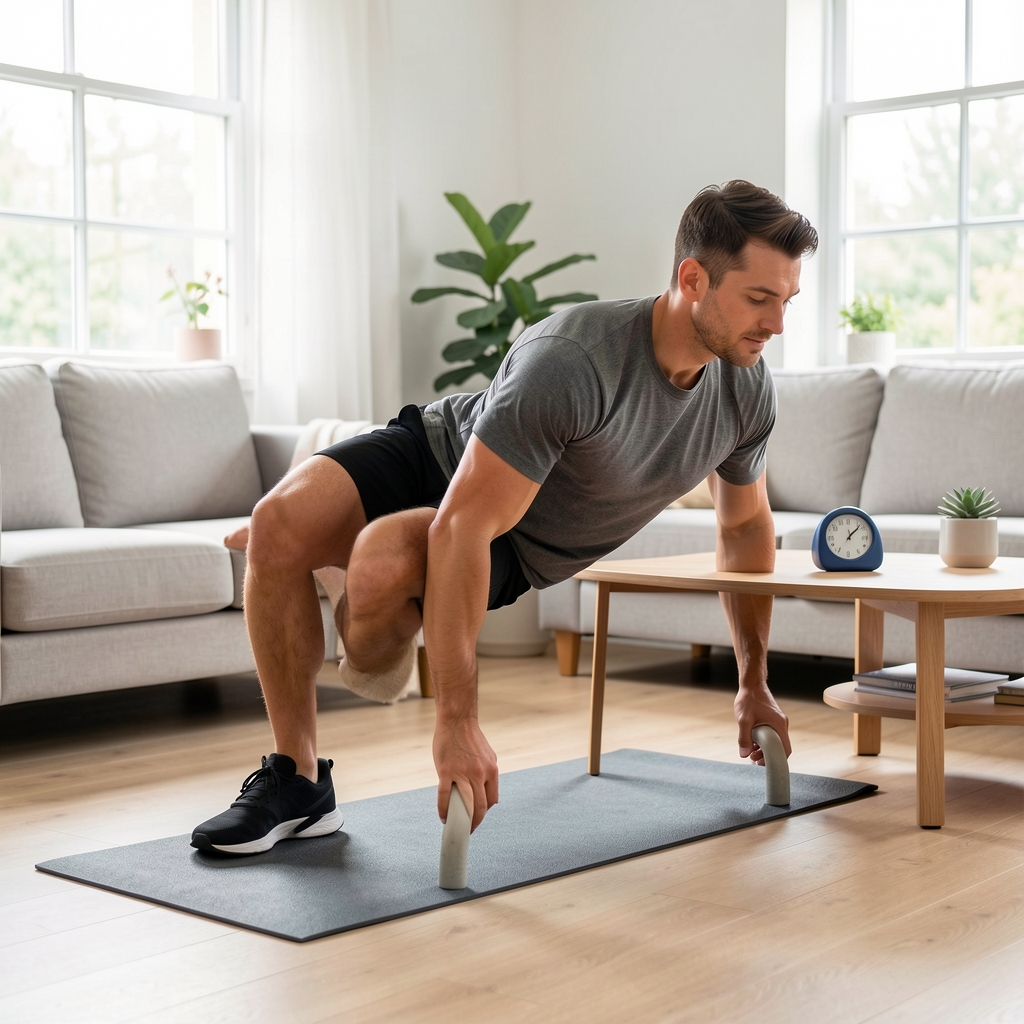
| Push-up hold | Maximum clean push-ups or time in a straight-arm plank | Upper body and trunk control |
| Single-leg balance | Time standing on one leg with eyes open, up to sixty seconds | Balance and ankle control |
| Sit-and-reach | Distance reached past the toes from a seated position | Hamstring and lower-back flexibility |
| Brisk walk time | Time to walk one kilometre at a firm pace | General aerobic capacity |
Preparing for your first round
- Choose a day when you feel rested and have eaten lightly an hour or two earlier.
- Warm up with five minutes of walking and gentle joint circles.
- Set up a stable chair, a timer and a notebook before you start.
- Perform checks in the order listed, resting two minutes between them.
- Photograph or record your technique once, so you can compare later.
- Repeat after eight weeks under similar conditions.
Reading results sensibly
Assessment rhythm
A suggested cycle for repeating the checks.
simple checks
minutes per round
weeks between rounds
notebook for all results
Key terms
Baseline
Your first set of recorded results, used as a personal reference.
Repetition maximum
The most weight you can lift for a stated number of repetitions with good technique. We do not advise testing a one-repetition maximum without supervision.
Asymmetry
A difference in strength or range between the left and right side of the body.
Range of motion
How far a joint can move in a given direction.
The assessment is a conversation starter, not a verdict. For questions or to suggest a check we have missed, visit the contact page or call +62 817 9345 1820. Further context on how we choose measures is on the methodology page.