Sleep is training context.
Sleep affects attention, appetite, mood and the ability to coordinate demanding movement. It deserves practical respect, not perfectionism. This page describes how sleep and training interact for adult men, what a steady evening routine can look like in a warm, busy city such as Jakarta, and when it makes sense to speak with a qualified health professional.
Everything here is general educational information published in 01.2026 and reviewed in 2026. It is not a diagnosis or a personal plan.
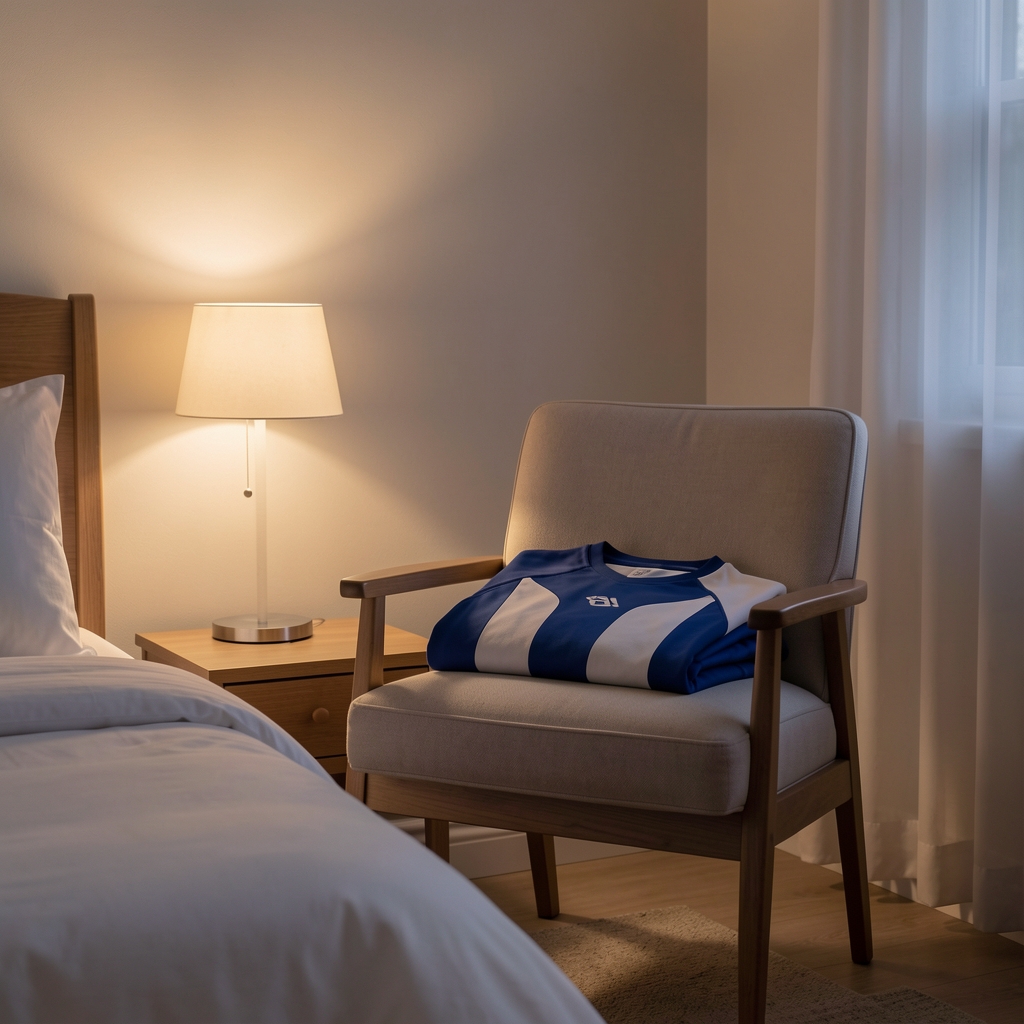

Why sleep belongs in a training article
Training is a stimulus; adaptation happens in the hours that follow. During sleep the body cycles through lighter and deeper stages, and these stages are associated with memory consolidation, hormonal rhythm and tissue maintenance. When sleep is shortened for several nights in a row, many people notice slower reaction time, lower motivation and a higher perceived effort at the same workload.
That is why sleep appears next to recovery, training load and stress in the Evance reading list. None of them works in isolation. A demanding week at the office, a long commute across South Jakarta and an early session can add up to a sleep debt that no single workout will explain.
For men over thirty-five the pattern is often the same: schedules tighten, responsibilities grow and sleep becomes the flexible item. Treating it as a fixed appointment, even an imperfect one, is usually the simplest first adjustment.
A steadier evening
The list below is a menu of options, not a rulebook. Most people adopt two or three items and ignore the rest, which is a sensible way to begin.
- Keep a realistic window for sleep rather than relying on willpower at midnight.
- Make the room cool, dark and quiet where possible. In a humid climate a fan or air conditioner set to a comfortable, steady temperature often matters more than extra bedding.
- Notice caffeine, late training and screen use as individual variables. Some people sleep well after an evening session; others stay alert for hours.
- Finish the last substantial meal a couple of hours before bed when practical, so that digestion does not compete with rest.
- Use a short wind-down sequence, such as dimmer lights, a shower and a few minutes of easy breathing or reading on paper.
- Get daylight early in the day. A ten to twenty minute morning walk helps anchor the body clock.
- Write tomorrow's first three tasks on paper before bed to reduce the habit of rehearsing them in the dark.
Ordering the day around sleep
- Choose a wake-up time you can keep on most days, including weekends within about an hour.
- Count backwards for at least seven hours of opportunity in bed; adults commonly need between seven and nine.
- Place the hardest training session where it leaves the evening calm, and keep late sessions lighter.
- Review after two weeks and adjust one variable at a time.
Common sleep disruptors in a tropical city
The table pairs frequent situations with neutral adjustments to consider. It is a thinking aid and does not replace individual advice.
| Situation | What often happens | Adjustment to consider |
|---|---|---|
| Warm, humid bedroom | Frequent waking and light, restless sleep | Steady cooling, breathable bedding, a lukewarm shower before bed |
| Long evening commute | Late dinner and late training pushing bedtime back | Move training to morning or lunch on two days per week |
| Work messages after hours | Mind stays active, falling asleep takes longer | Set a cut-off time for notifications; keep the phone outside reach of the bed |
| Intense late session | Elevated heart rate and alertness at bedtime | Lower intensity after dusk; add a ten minute cool-down |
| Irregular weekend schedule | Monday feels like jet lag | Keep wake time within an hour of weekday time |
Evance editorial note: a training plan that quietly assumes eight perfect hours every night is not a plan for real life. Write the plan for the sleep you actually get, then improve it slowly.
Adjusting training after a short night
A single poor night rarely ruins a week. The practical response is usually to keep the session but lower the ceiling: fewer heavy sets, a shorter interval block or a steady aerobic session at conversational pace. Skip technically demanding lifts when attention is low, because coordination suffers before strength does. If poor sleep continues for several nights, it is reasonable to reduce the total load for the week and look at the factors in the stress page.
Wearable devices that estimate sleep stages can be interesting, but their readings are approximations. Use trends across weeks rather than a single morning score, and give more weight to how you feel and perform than to a number on a screen.
Questions readers ask
How many hours are typical for adults?
Public health bodies generally describe seven to nine hours as a common range for adults. Individual needs vary, and the right amount is the one that leaves you alert through the day without heavy reliance on stimulants.
Is a daytime nap useful?
A short nap of twenty to thirty minutes earlier in the afternoon suits many people. Longer or later naps can make it harder to fall asleep that night, so it is worth observing your own response.
Should I train when I feel exhausted?
Light movement such as walking or easy mobility from the mobility page is often reasonable. Heavy or high-intensity work is usually better postponed until attention returns.
When to ask for help
Persistent insomnia, loud snoring, witnessed breathing pauses or overwhelming daytime sleepiness deserve discussion with a qualified health professional. The same applies if low mood, morning headaches or unexplained fatigue accompany poor sleep. Evance does not diagnose sleep conditions and the material on this site is not a substitute for medical care; please read the disclaimer for the full wording.
If you want to see how we assemble pages like this one, the methodology page lists the sources we favour and how corrections are handled. Questions or corrections can be sent through the contact page or by phone to +62 817 9345 1820 at Jalan Anggrek Raya No. 15, Kemang, Jakarta Selatan 12730.